Florida mortgage rates returned to 6.55% on July 16, 2026, lifting monthly costs but not changing the central decision for borrowers: the quote, points, insurance, taxes and expected holding period matter more than one weekly headline. Buyers should compare complete Loan Estimates, test payments above today’s rate and use the Florida mortgage-rate forecast with the 10-year Treasury guide before deciding when to lock.
Key Takeaways
- Freddie Mac’s national 30-year fixed average increased from 6.49% to 6.55% for the week ending July 16, while the 15-year average rose from 5.82% to 5.93%.
- On a $500,000 30-year loan, principal and interest is about $3,177 per month at 6.55%, before taxes, insurance, association dues or mortgage insurance.
- The six-basis-point weekly change adds only about $20 per month on a $500,000 loan. The larger affordability problem is the difference between today’s mid-6% market and a rate closer to 6%.
- Florida borrowers should compare rate, annual percentage rate, points, lender credits, cash to close and lock terms on the same loan scenario.
- A lower advertised rate is not automatically the least expensive loan. Discount points only work when the monthly savings recover the upfront cost before the loan is sold, refinanced or paid off.
Florida Mortgage Rates at 6.55%: What Changed?
The Freddie Mac Primary Mortgage Market Survey reported a 6.55% average for a 30-year fixed mortgage as of July 16, 2026. That was six basis points above the prior week’s 6.49% and 20 basis points below the 6.75% average from the same week in 2025. The 15-year fixed average increased to 5.93% from 5.82%.
The weekly increase was part of a choppy but relatively narrow range. Freddie Mac’s 2026 survey archive shows the 30-year average at 6.43% on July 2, 6.49% on July 9 and 6.55% on July 16. Since mid-May, the weekly readings have generally remained in the mid-6% area rather than moving in a clean direction.
A second benchmark showed slightly higher pricing. The Mortgage Bankers Association reported that the average contract rate for conforming 30-year loans rose to 6.65% in the week ending July 10, with 0.67 points for an 80% loan-to-value application. The MBA survey also found a 7% weekly decline in its seasonally adjusted Purchase Index, while refinance applications increased 4%. The difference between the MBA and Freddie Mac readings is not a contradiction. The surveys use different samples, timing and assumptions.
What Does a 6.55% Mortgage Rate Mean for the Monthly Payment?
The rate becomes useful only after it is translated into a payment. The table below shows principal and interest for fully amortizing 30-year loans. It does not include property taxes, homeowners or flood insurance, condominium or homeowners association dues, mortgage insurance, prepaid items or closing costs.
| Loan amount | Payment at 6.00% | Payment at 6.55% | Payment at 7.00% |
|---|---|---|---|
| $300,000 | $1,799 | $1,906 | $1,996 |
| $400,000 | $2,398 | $2,541 | $2,661 |
| $500,000 | $2,998 | $3,177 | $3,327 |
| $700,000 | $4,197 | $4,448 | $4,657 |
On a $500,000 loan, moving from 6.00% to 6.55% raises principal and interest by about $179 per month, or roughly $2,148 per year. Moving from 6.55% to 7.00% adds another $150 per month. This is why borrowers should qualify the property at more than one rate instead of treating the current quote as a permanent ceiling.
The weekly move from 6.49% to 6.55% is less dramatic. It adds about $16 per month on a $400,000 loan and about $20 on a $500,000 loan. A concession, price reduction or insurance difference can easily outweigh that change. The rate matters, but the full transaction determines affordability.
Why the National Average Is Not Your Florida Mortgage Rate
There is no single interest rate assigned to Florida. Freddie Mac publishes a national average drawn from thousands of mortgage applications submitted through its Loan Product Advisor system. An individual Florida quote can be lower or higher based on the borrower, property, loan program and day of pricing.
Credit score, loan-to-value ratio, debt-to-income ratio, occupancy, loan size, property type and lock period can all change pricing. A primary residence with strong credit and 25% down is not priced the same as a second home, investment property, non-warrantable condominium or cash-out refinance. Self-employed borrowers may also need to compare agency financing with Florida bank-statement loan options, which use different underwriting and pricing.
Loan size is especially relevant in South Florida. The Federal Housing Finance Agency set the 2026 baseline conforming limit for a one-unit property at $832,750. Loans above the applicable county limit enter jumbo territory and can have different reserve, credit and liquidity requirements. Miami buyers should compare those requirements with the site’s 2026 jumbo-loan guide.
The 10-Year Treasury and Mortgage Spread Explain More Than the Fed Alone
Thirty-year mortgage rates usually take their direction from longer-term bond markets, particularly the 10-year Treasury and mortgage-backed securities, rather than moving one-for-one with the federal funds rate. Investors demand compensation for duration, prepayment uncertainty, servicing, credit and market volatility. That compensation appears in the spread between mortgage rates and Treasury yields.
The U.S. Treasury’s daily yield curve placed the 10-year constant-maturity yield at 4.57% on July 16. Comparing that daily reading with Freddie Mac’s 6.55% weekly mortgage average produces an illustrative spread of about 1.98 percentage points. It is not a tradable spread because the observations use different timing and methodologies, but it shows why mortgage rates can stay elevated even when short-term policy rates are lower.
The Federal Reserve maintained a 3.50% to 3.75% federal funds target range at its June meeting. Its July 2026 Monetary Policy Report said inflation remained elevated relative to the 2% objective and noted continued uncertainty. The next scheduled FOMC meeting is July 28–29. A policy change could influence expectations, but mortgage rates will also respond to inflation data, labor-market conditions, Treasury supply, energy prices and investor demand for mortgage-backed securities.
Florida’s Total Housing Cost Is Bigger Than the Note Rate
Florida borrowers should underwrite the complete monthly obligation. Principal and interest are only the first layer. Property taxes, homeowners insurance, flood insurance where applicable, mortgage insurance and association dues can materially change both qualification and the household budget.
Insurance deserves its own stress test. Premiums and deductibles vary by location, construction, roof age, wind mitigation, flood exposure and carrier. A buyer who saves $100 per month through a lower rate can still lose that benefit if the final insurance quote is $250 above the early estimate. The site’s analysis of Florida insurance and the cost of carry explains why rate shopping and property diligence must happen together.
Condominium buyers have an additional layer: master insurance, reserves, special assessments and project eligibility. A well-qualified borrower can still face limited financing if the building does not satisfy the selected program’s requirements. Review the Florida condo financing guide before treating a unit-level payment estimate as final.
Market conditions can offset part of the rate burden. Florida’s inventory and seller behavior vary by property type and location, and more negotiating room can produce closing-cost credits or price reductions. The latest Florida housing sales analysis provides the transaction context behind the financing numbers.
How to Compare Mortgage Offers Without Being Misled by the Lowest Rate
A borrower should request Loan Estimates for the same loan type, term, down payment, occupancy and lock period. Comparing a zero-point quote from one lender with a two-point quote from another does not reveal which loan is cheaper. The interest rate, annual percentage rate, lender-controlled fees, credits and cash to close must be evaluated together.
The Consumer Financial Protection Bureau recommends comparing multiple Loan Estimates and checking whether the interest rate is locked. The document also separates origination charges, services the borrower can shop for, lender credits and prepaid costs. Taxes and insurance may be similar across lenders, while rate, points and lender fees can differ.
| Item to compare | Why it matters | Question to ask |
|---|---|---|
| Interest rate | Determines scheduled principal and interest | Is this rate locked, and until what date? |
| APR | Reflects the rate plus certain finance charges | Why is the APR materially above the note rate? |
| Points | Raises cash at closing to obtain a lower rate | What is the break-even month? |
| Lender credits | Reduce upfront cash but may increase the rate | What is the same loan with zero credit? |
| Lock terms | Controls exposure before closing | What does an extension cost if closing is delayed? |
| Total cash to close | Shows the immediate liquidity requirement | Which charges can still change? |
When Do Discount Points Make Sense?
One discount point equals 1% of the loan amount. The CFPB’s points guidance explains that points increase upfront closing costs in exchange for a lower rate from the same lender. One point does not guarantee a specific rate reduction. The price improvement changes with the lender, product and market.
Consider an illustration, not a market quote. One point on a $500,000 loan costs $5,000. If the same lender offered 6.55% with no points or 6.25% after one point, principal and interest would decline from about $3,177 to $3,079, a savings of approximately $98 per month. The simple break-even period would be about 51 months before considering the time value of money or tax treatment.
Points can make sense when the borrower expects to keep the loan beyond the break-even month and has adequate reserves after closing. They are less compelling when a sale, refinance or accelerated payoff is likely. Seller-paid costs can change the cash decision, but the borrower should still calculate whether the chosen rate creates value.
Should a Florida Borrower Lock the Rate Now?
A rate lock protects the quoted interest rate through a stated expiration date as long as the transaction closes on time and the application does not materially change. According to the CFPB’s rate-lock guidance, common lock periods include 30, 45 and 60 days, though lender policies differ.
The correct lock decision depends on the closing schedule and the borrower’s tolerance for payment risk. A buyer under contract with a firm payment ceiling has a different objective from a borrower who can absorb volatility. Waiting for a lower market can save money, but it can also expose the transaction to a higher rate or an extension problem.
Before locking, ask whether the lock includes a float-down feature, what an extension costs, what happens if the appraisal or loan amount changes and whether the lender can relock after expiration. A lock should cover the realistic closing date, not the most optimistic date in the contract.
Purchase, Refinance and Investor Decisions Require Different Math
Homebuyers
Buyers should set a total monthly ceiling and solve backward to a purchase price. The stress test should include the quoted rate, a higher-rate case, verified insurance, taxes and association charges. A seller credit used for permanent points or a temporary buydown should be compared with a price reduction, because each changes risk differently.
Current homeowners considering a refinance
A refinance should be judged by net monthly savings and total transaction cost, not by the rate reduction alone. Divide recoverable closing costs by monthly savings to estimate the break-even period. Cash-out proceeds, mortgage insurance, a reset to a new 30-year term and the borrower’s expected holding period can materially change the result.
Investors
Investors should test debt-service coverage using realistic rent, vacancy, management, maintenance, taxes, insurance and association costs. A headline conventional rate may not apply to a rental property or business-purpose product. The site’s Florida DSCR loan-rate analysis explains how leverage, coverage and prepayment terms affect investor pricing.
What Could Move Florida Mortgage Rates Next?
The first group of signals is macroeconomic: inflation, employment, growth and energy costs. Stronger inflation or a resilient economy can push longer-term yields higher because investors demand more return. Softer data can pull yields down, but only if markets believe inflation will remain controlled.
The second group is mortgage-specific. Investor demand for mortgage-backed securities, expected prepayments, market volatility and lender capacity can widen or narrow the mortgage spread. This is why a Treasury rally does not always pass through immediately to consumer rate sheets.
The third group is Florida housing demand. Florida Realtors reported that May pending sales increased 4.8% year over year for single-family homes and 9% for condo-townhouse properties, while emphasizing that the path of mortgage rates remained important to the summer market. The Florida Realtors analysis supports a balanced conclusion: demand can improve without returning to the low-rate conditions of the prior cycle.
A Practical Decision Framework for Borrowers
- Set the all-in payment ceiling. Include principal, interest, taxes, insurance, mortgage insurance and association costs.
- Request comparable Loan Estimates. Keep loan type, term, down payment and lock period constant.
- Compare zero-point and point options. Calculate cash cost, monthly savings and break-even month.
- Stress-test the payment. Recalculate at least 0.50 percentage point above the quote and with a realistic insurance estimate.
- Match the lock to the transaction. Include time for appraisal, condominium review, insurance and underwriting conditions.
- Preserve liquidity. A lower rate should not leave the borrower without reserves for repairs, assessments or income disruption.
This framework shifts the decision from “Will rates fall?” to “Does this transaction work today, and what would make it fail?” Forecasts can help plan, but a sound purchase should not require a perfectly timed bond market.
Risks, Scenarios and Methodology
The base case is continued volatility around a restrictive but functioning mortgage market. An easing scenario would combine softer inflation, lower Treasury yields and a narrower mortgage spread. A higher-rate scenario could result from renewed inflation pressure, stronger growth, heavier Treasury supply or weaker demand for mortgage-backed securities.
Rate observations in this analysis are dated. Freddie Mac’s 6.55% and 5.93% averages are for July 16, 2026. MBA’s 6.65% conforming contract rate and 0.67 points are for applications in the week ending July 10. The Treasury comparison uses the 4.57% 10-year constant-maturity yield reported for July 16. These series are market benchmarks, not offers to a specific borrower.
Payment calculations assume a fully amortizing fixed-rate loan with 360 monthly payments and show principal and interest only. Figures are rounded to the nearest dollar. The points example assumes a hypothetical rate reduction from the same lender solely to demonstrate break-even math; actual point pricing must come from a current Loan Estimate.
The Bottom Line
Florida mortgage rates at 6.55% keep affordability tight, but the weekly increase itself is not the main story. On a $500,000 loan, the move from 6.49% to 6.55% changes principal and interest by about $20 per month. Insurance, property selection, seller concessions, points and lender pricing can have a much larger effect.
The strongest borrower strategy is to compare complete offers, calculate the all-in payment, preserve reserves and lock according to the closing schedule. A lower future rate would create refinancing or purchasing opportunities, but today’s transaction should remain viable without depending on that outcome.
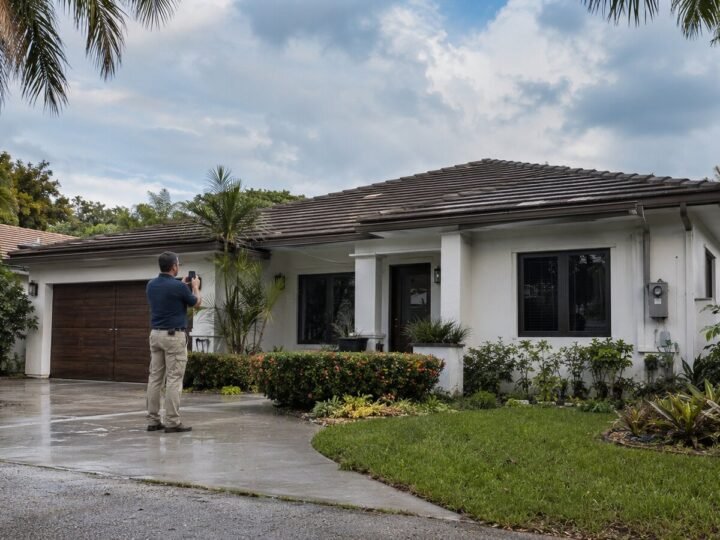
Featured photo by Shawn Henley via Unsplash.
Frequently Asked Questions
What were average mortgage rates on July 16, 2026?
Freddie Mac reported a 6.55% national average for a 30-year fixed mortgage and 5.93% for a 15-year fixed mortgage. Those are weekly benchmarks, not guaranteed Florida borrower quotes.
How much is the payment on a $500,000 mortgage at 6.55%?
Principal and interest on a 30-year fixed $500,000 loan is approximately $3,177 per month. Property taxes, insurance, mortgage insurance and association dues would be additional.
Does the Federal Reserve directly set Florida mortgage rates?
No. The Fed sets a short-term policy-rate target. Thirty-year mortgage rates are more closely tied to longer-term Treasury yields, mortgage-backed securities pricing, investor demand and lender-specific margins.
Is it worth paying discount points at 6.55%?
It depends on the upfront cost, the rate reduction and how long the borrower expects to keep the loan. Divide the point cost by monthly savings to estimate the break-even period, then compare that period with the expected sale or refinance date.
Should I wait for mortgage rates to fall before buying in Florida?
Waiting may help if rates fall, but prices, inventory, concessions and insurance costs can also change. A better test is whether the property works within an all-in payment ceiling today and remains affordable under a higher-rate or higher-expense scenario.
Primary Sources
- Freddie Mac, Primary Mortgage Market Survey, July 16, 2026
- Freddie Mac, Mortgage Market Survey Archive
- Mortgage Bankers Association, Weekly Applications Survey, July 15, 2026
- U.S. Department of the Treasury, Daily Treasury Par Yield Curve Rates
- Federal Reserve, Monetary Policy Report, July 2026
- Consumer Financial Protection Bureau, Loan Estimate Comparison Guide
- Consumer Financial Protection Bureau, Lender Credits and Discount Points
- Consumer Financial Protection Bureau, Mortgage Rate Locks
- Federal Housing Finance Agency, 2026 Conforming Loan Limits
- Florida Realtors, Pending Sales and Summer 2026 Market Outlook
Market intelligence. Capital insight. Delivered daily.
Miami Finance Review produces independent editorial analysis. Figures are attributed to their sources and independently cross-checked where possible. This content is informational and is not investment, legal, tax or lending advice.