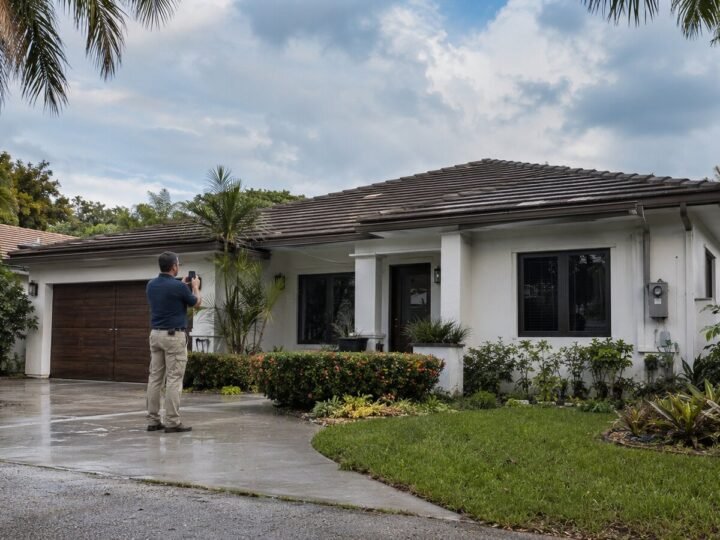
Short-term rental financing in Florida can use full-document, DSCR, portfolio or specialized programs, but lenders do not all treat projected Airbnb income the same way. The most financeable properties combine legal short-term-rental use, documented operating history, durable demand, appropriate insurance and a conservative income analysis that can survive seasonality.
The operating model creates more revenue variability than a conventional annual lease. Municipal rules, condominium documents, platform history and management expenses can change the usable income, so legal and operational diligence must precede the loan comparison. For the broader market framework, read our dscr loan rates florida.
Key Takeaways
- Local zoning and licensing
- Hoa or condominium rental restrictions
- Whether the property works as a long-term rental fallback
- Whether third-party management is required
The Income Question
The Income Question is where the market narrative becomes an underwriting question. The analysis below connects the visible headline to the cash flow, documentation and timing that determine the actual result.
AirDNA projections vs. trailing twelve
Another critical variable is local zoning and licensing. The headline treatment often understates how this factor interacts with leverage, liquidity and timing. In practice, a favorable answer can expand options, while an unresolved answer can narrow the lender pool or reduce a buyer’s willingness to proceed. The correct approach is to quantify the effect, assign an owner to the unresolved item and establish the date by which it must be resolved. That turns a vague market risk into a decision that can be monitored.
That issue connects directly with our analysis of Non-Warrantable Condo Financing in Florida.
Haircuts lenders apply
Hoa or condominium rental restrictions deserves a separate sensitivity test. The base case should use current evidence, but the underwriting case should also model a less favorable result. For airbnb loan florida, the important question is not whether the optimistic outcome is possible; it is whether the capital structure and operating plan can survive a reasonable setback. This is where stronger equity, additional reserves, flexible timing or a lower purchase basis can create more value than a marginally lower quoted rate.
The Zoning and HOA Layer
This section separates structural forces from temporary conditions. The distinction matters because a short-term adjustment may change pricing, while a structural change can alter eligibility, value and the long-run buyer or lender pool.
The market signal embedded in trailing operating statements is easy to miss. It can reveal whether pricing is being supported by durable income and demand or by temporary financing conditions. Miami Finance Review treats the signal as part of a system rather than an isolated statistic: direction, dispersion by submarket and the financing response all matter. When those three elements move together, the signal is more useful for decisions than a single citywide average.
The next decision point is examined in Homeowners Insurance and the Cost of Carry: Florida’s Hidden Rate Hike.
From an execution standpoint, market-rent or third-party projection methodology should be documented before the transaction reaches its final deadline. Late discovery usually has a nonlinear cost because it can force a new appraisal, revised structure, additional equity or contract extension. Teams that assemble the evidence early can compare alternatives while they still have negotiating leverage. Teams that wait often confuse urgency with certainty and accept a solution that is more expensive or less flexible.
Condotels and STR-Approved Buildings
The useful framework is evidence first, scenario second and decision third. Current data establishes the base case; a downside scenario tests resilience; the resulting threshold guides action.
The risk around seasonality and management expense is best managed through explicit thresholds. A buyer, developer or lender can define the maximum acceptable exposure, the evidence required to proceed and the condition that triggers a pause. This approach is particularly useful in South Florida, where insurance, condominium governance, international capital and construction timing can produce property-level outcomes that diverge sharply from regional headlines. Clear thresholds preserve discipline when the market narrative becomes emotional.
For adjacent context, see Miami Condo Supply at 12.9 Months: What a Buyer’s Market Actually Means.
Consider property type and insurance as part of the exit, not only the entry. A structure that closes efficiently today may reduce refinance proceeds, sale flexibility or future buyer eligibility. The analysis should therefore compare the initial benefit with the cost under at least two exit dates and one adverse market case. For professional readers, this forward view is often the difference between a transaction that merely closes and an investment that remains financeable.
Insurance for STR Properties
For South Florida readers, the answer often varies by building, submarket and capital source. The regional trend provides context, but the property-level facts control the transaction.
Reliable decisions require a common definition of confirm the use is legally permitted. Borrowers, brokers, associations, appraisers and investors may use the same phrase to describe different calculations or documents. The article uses the term only after identifying the measurement period, source and as-of date. That precision supports better comparisons, reduces avoidable disputes and makes future updates possible when the data changes.
Readers evaluating the same risk should also review complete DSCR loan guide.
The first analytical issue is review trailing bookings, statements and tax records where available. In the context of Short-Term Rental Financing in Florida: How Lenders Underwrite Airbnb Income, this is not a secondary checklist item. It changes the amount of risk that can be transferred, financed or priced. Market participants should identify the responsible party, the evidence available as of the review date and the downside case if the assumption fails. A disciplined file separates what is documented from what is projected, then asks whether the transaction still works when the projection is delayed or reduced.
The Numbers: STR DSCR Worked Example vs. Long-Term Rental
The Numbers: STR DSCR Worked Example vs. Long-Term Rental is where the market narrative becomes an underwriting question. The analysis below connects the visible headline to the cash flow, documentation and timing that determine the actual result.
| Income evidence | Strength | Limitation |
|---|---|---|
| Trailing 12-month operations | Shows actual demand and expenses | May reflect unusually strong or weak period |
| Current lease or management statement | Verifiable recurring activity | Can be short and property-specific |
| Third-party market projection | Useful for new acquisitions | Usually subject to haircut and lender discretion |
| Long-term market rent | Conservative fallback | May not support the acquisition price |
The table is a framework for comparison, not a substitute for property-specific evidence. The most useful application is to identify which input can change the decision and to update that input as new information arrives. As of July 16, 2026, the market remains selective enough that small differences in leverage, documentation, building condition or timing can produce materially different outcomes.
The capital-markets consequence is developed further in Bank Statement Loans in Florida: How Self-Employed Buyers Qualify.
What This Means For STR Investors
The implications differ by role because each participant controls a different part of the outcome. The following framework converts the market analysis into practical priorities.
STR investors
Underwrite both the high-revenue case and the long-term-rental fallback. The legal-use file should be as organized as the financial file.
Condo buyers
Read the declaration, amendments and rental rules rather than relying on listing language.
Lenders and advisers
Separate gross booking revenue from net operating cash flow and identify every recurring expense.
A Practical Decision Framework
The most effective way to use this analysis is to convert it into a sequence. First, define the objective and the nonnegotiable constraint. Second, gather the primary evidence and date every material input. Third, run a base case and a downside case. Fourth, compare at least two structures or strategies. Finally, document the trigger that would change the decision. This process reduces the risk of allowing a headline, a rate quote or a single comparable sale to dominate a complex transaction.
Whether the property works as a long-term rental fallback
The first analytical issue is whether the property works as a long-term rental fallback. In the context of Short-Term Rental Financing in Florida: How Lenders Underwrite Airbnb Income, this is not a secondary checklist item. It changes the amount of risk that can be transferred, financed or priced. Market participants should identify the responsible party, the evidence available as of the review date and the downside case if the assumption fails. A disciplined file separates what is documented from what is projected, then asks whether the transaction still works when the projection is delayed or reduced.
A companion analysis explains Fix and Flip Financing in South Florida: Bridge, Hard Money and the Exit Math.
Whether third-party management is required
Another critical variable is whether third-party management is required. The headline treatment often understates how this factor interacts with leverage, liquidity and timing. In practice, a favorable answer can expand options, while an unresolved answer can narrow the lender pool or reduce a buyer’s willingness to proceed. The correct approach is to quantify the effect, assign an owner to the unresolved item and establish the date by which it must be resolved. That turns a vague market risk into a decision that can be monitored.
How the lender treats cleaning, utilities and platform fees
How the lender treats cleaning, utilities and platform fees deserves a separate sensitivity test. The base case should use current evidence, but the underwriting case should also model a less favorable result. For airbnb loan florida, the important question is not whether the optimistic outcome is possible; it is whether the capital structure and operating plan can survive a reasonable setback. This is where stronger equity, additional reserves, flexible timing or a lower purchase basis can create more value than a marginally lower quoted rate.
Whether the building is a condotel or non-warrantable
The market signal embedded in whether the building is a condotel or non-warrantable is easy to miss. It can reveal whether pricing is being supported by durable income and demand or by temporary financing conditions. Miami Finance Review treats the signal as part of a system rather than an isolated statistic: direction, dispersion by submarket and the financing response all matter. When those three elements move together, the signal is more useful for decisions than a single citywide average.
Risks and Signals to Watch
No static article can remove market risk. The objective is to identify the variables that should be refreshed and the events that require a new decision. Readers should update the analysis when financing terms, insurance, legal requirements, project status, rent, vacancy, appraisal evidence or material property documents change.
- Illegal use
- Hoa rule changes
- Optimistic revenue projections
- Seasonal cash deficits
- Platform or tourism shocks
The risk around illegal use is best managed through explicit thresholds. A buyer, developer or lender can define the maximum acceptable exposure, the evidence required to proceed and the condition that triggers a pause. This approach is particularly useful in South Florida, where insurance, condominium governance, international capital and construction timing can produce property-level outcomes that diverge sharply from regional headlines. Clear thresholds preserve discipline when the market narrative becomes emotional.
Consider HOA rule changes as part of the exit, not only the entry. A structure that closes efficiently today may reduce refinance proceeds, sale flexibility or future buyer eligibility. The analysis should therefore compare the initial benefit with the cost under at least two exit dates and one adverse market case. For professional readers, this forward view is often the difference between a transaction that merely closes and an investment that remains financeable.
Reliable decisions require a common definition of optimistic revenue projections. Borrowers, brokers, associations, appraisers and investors may use the same phrase to describe different calculations or documents. The article uses the term only after identifying the measurement period, source and as-of date. That precision supports better comparisons, reduces avoidable disputes and makes future updates possible when the data changes.
Methodology and Editorial Standard
This analysis was prepared for Miami Finance Review in Brickell, Miami, and updated July 16, 2026. It relies on primary or first-party material including Fannie Mae Selling Guide, Ineligible Projects; MIAMI REALTORS, Miami-Dade Home Sales Rise for Ninth Consecutive Month, June 16, 2026; Citizens Property Insurance Corporation, July 2026 Rate Rule and Wind-Loss Mitigation Updates. Figures are treated as dated observations rather than permanent market truths. Where a table is illustrative, it is labeled accordingly and is intended to explain a decision framework, not to quote a loan, predict a guaranteed outcome or replace legal, tax, engineering or investment advice.
Frequently Asked Questions
Can projected Airbnb income qualify a loan?
Some programs accept third-party projections or market analysis, usually with haircuts and property-specific limitations.
Can a condotel obtain financing?
Specialized portfolio and non-QM programs may finance qualifying condotels, but leverage, rates and project review differ.
Does an HOA have to permit short-term rentals?
Yes. Legal municipal use does not override private association restrictions.
What is the safest fallback?
A property that also supports a viable annual lease has more resilience if short-term-rental performance or rules change.
Primary Sources
Market intelligence. Capital insight. Delivered daily.
Miami Finance Review produces independent editorial analysis. Figures are attributed to their sources and independently cross-checked where possible. This content is informational and is not investment, legal, tax or lending advice.