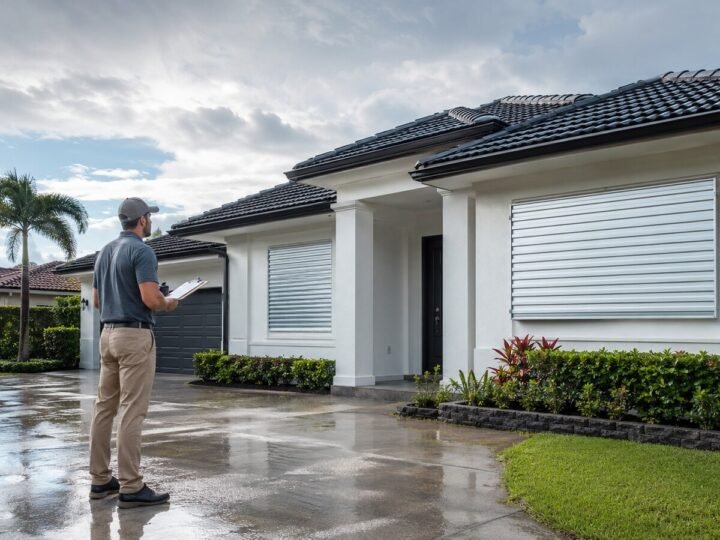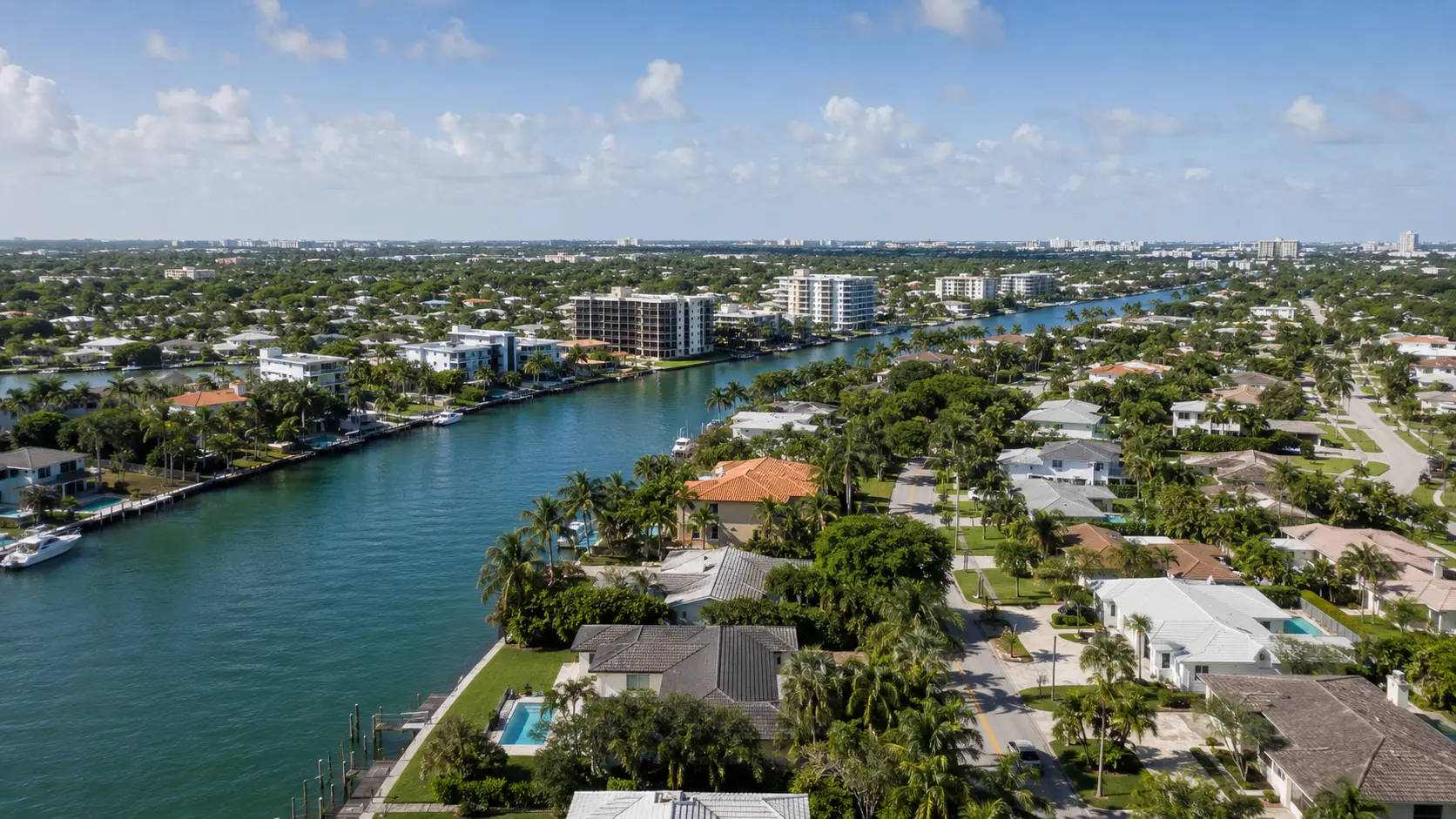
For financially prepared buyers with a five-year or longer time horizon, 2026 is creating one of Florida’s more constructive purchasing windows since the pre-pandemic market. Buyers have more selection, more time for due diligence and more negotiating leverage, while statewide sales, pending contracts and median prices are still advancing. That combination points to a market that is rebalancing rather than breaking.
Key takeaways
- Florida single-family sales rose 9.3% year over year in June 2026, while condo and townhouse closings increased 14%.
- Single-family inventory reached a balanced 4.5 months of supply. Condo and townhouse inventory reached 8.1 months, creating greater buyer leverage but requiring deeper building-level due diligence.
- Florida prices did not collapse as inventory improved. June median prices increased to $432,000 for single-family homes and $305,000 for condos and townhouses.
- The average 30-year fixed mortgage rate was 6.58% on July 23, 2026, making payment discipline essential.
- The best opportunity is not simply the lowest asking price. It is a sound property, sustainable total payment and negotiable transaction structure.
Is now a good time to buy a house in Florida?
The honest answer is yes for some buyers, but not because anyone can identify the exact bottom of a housing cycle.
It may be a good time to buy a house in Florida when a buyer has stable income, adequate reserves, a sustainable all-in housing budget and an expected holding period long enough to absorb normal market fluctuations. The 2026 market is offering something buyers rarely had during the 2021 and 2022 frenzy: the ability to compare properties, preserve inspection protections and negotiate price or seller concessions without assuming Florida’s long-term housing demand has disappeared.
That distinction matters. A buyer-friendly transaction environment does not automatically make every property a good purchase. Florida remains a highly localized market. Insurance, flood exposure, roof age, property taxes, condominium reserves, association assessments and financing eligibility can materially change the economics of two similarly priced homes.
The better question is not, “Can I time the bottom?” It is, “Can I acquire the right Florida property on terms that remain comfortable if prices move sideways and mortgage rates stay elevated?”
What the viral home-price charts actually show
The long-term housing charts circulating on social media are directionally useful, but they often combine different datasets.
The Federal Reserve Bank of St. Louis series shown in one viral post is the Median Sales Price of Houses Sold for the United States. It is based on newly built homes sold, is reported quarterly and is not seasonally adjusted. The series registered $410,700 in the second quarter of 2026, according to the July 24 release displayed by FRED. That was approximately 1.9% above the first quarter’s $403,200 and approximately 1.3% below the second quarter of 2025.
The other widely shared chart tracks the median price of existing homes using National Association of Realtors data. NAR reported a national median existing-home price of $440,600 in June 2026, up 1.8% from a year earlier and marking the 36th consecutive month of annual price increases.
Those numbers should not be compared as if they describe the same group of homes. New construction and existing homes have different geographic mixes, sizes, incentives and reporting schedules. The more durable takeaway is that housing prices move through cycles, not in a straight line, while ownership outcomes are usually determined over years rather than a single quarter.
| Housing series | Latest observation | What it measures | Buyer takeaway |
|---|---|---|---|
| U.S. new-home median price | $410,700, Q2 2026 | New houses sold, quarterly | New construction pricing has stabilized below its 2025 level. |
| U.S. existing-home median price | $440,600, June 2026 | Existing homes, monthly | Resale prices remained 1.8% above the prior year. |
| Florida single-family median price | $432,000, June 2026 | Existing single-family homes | Prices rose 4.9% year over year as sales accelerated. |
| Florida condo-townhouse median price | $305,000, June 2026 | Existing condos and townhouses | Prices rose 1.7% despite substantially more inventory. |
Seven signals creating opportunity for Florida buyers in 2026
1. Florida sales momentum is strengthening
Florida’s housing market extended its year-over-year growth streak to 10 consecutive months in June. Existing single-family closed sales totaled 26,036, up 9.3% from June 2025. Condo and townhouse closings reached 8,900, an increase of 14%.
The second-quarter numbers were also positive. Single-family sales increased 4.1% year over year to 75,080, while condo and townhouse sales rose 9% to 27,101. The recovery is not uniform across every county or price range, but transaction volume is moving closer to 2023 levels.
This is important for buyers because it suggests the market is liquid enough to support price discovery without returning to the extreme competition of the pandemic period. Our June 2026 Florida housing-market analysis provides the full statewide breakdown.
2. Pending sales show buyers are still entering the market
New pending sales of Florida single-family homes increased 4.1% year over year in June to 24,235. Pending inventory, which measures homes under contract at month-end, rose 5.1% to 32,034.
That performance is notable because national pending sales declined 0.3% from a year earlier and the broader South posted a 0.9% annual decline. Florida’s result indicates that qualified buyers are not simply waiting on the sidelines. They are acting when the property and transaction terms make sense.
3. Inventory has returned without resembling the post-2008 market
Florida had 4.5 months of single-family supply in June, a level generally associated with a more balanced market. Condo and townhouse supply stood at 8.1 months, giving buyers meaningfully more choice and negotiating room.
More inventory can feel negative after several years of scarcity, but historical context is essential. Florida Realtors reported that statewide single-family inventory in April was only a little more than 7% above its April 2019 level. Condo and townhouse inventory was nearly 16% above April 2019, still far below the type of distressed oversupply seen after the housing crash.
Today’s inventory is better understood as normalization. Homes are staying available long enough to appear in monthly counts, and buyers have regained the ability to compare condition, location and carrying costs.
4. Prices are stabilizing instead of collapsing
Florida’s June median single-family price increased 4.9% year over year to $432,000. The condo and townhouse median rose 1.7% to $305,000.
For the full second quarter, the single-family median was $425,000, up 2.4%, while the condo and townhouse median held flat at $310,000. Moderate price movement alongside stronger sales is a healthier setup than a market driven by either speculative bidding or distressed liquidation.
This also helps explain why Florida’s elevated foreclosure filing rate does not automatically signal another 2008. Equity, loan quality and the composition of inventory are materially different. See our separate analysis, Florida Posts America’s Highest Foreclosure Rate, but This Is Not 2008.
5. Affordability has improved even though mortgage rates remain restrictive
NAR’s national Housing Affordability Index increased to 102.3 in June from 95.5 a year earlier. Affordability improved across every U.S. region, including an 8.3% annual improvement in the South.
That does not mean Florida housing is inexpensive. It means wage growth, slower home-price appreciation and somewhat improved inventory have begun to offset part of the pressure from mortgage rates.
Freddie Mac’s national survey placed the average 30-year fixed mortgage rate at 6.58% on July 23. At that rate, principal and interest on a $400,000, 30-year loan is approximately $2,549 per month. The calculation excludes property taxes, homeowners insurance, flood insurance, association charges, mortgage insurance and closing costs.
| Loan amount | Estimated monthly principal and interest at 6.58% |
|---|---|
| $300,000 | $1,912 |
| $400,000 | $2,549 |
| $500,000 | $3,187 |
| $600,000 | $3,824 |
Buyers should compare the full monthly obligation rather than focus on the rate alone. Our Florida mortgage-rate analysis explains the payment math and rate-lock considerations in greater detail.
6. The market split creates different kinds of leverage
Florida is not one housing market. Central Florida, Southwest Florida and South Florida are moving through the cycle at different speeds.
ICE Mortgage Technology data reported by Florida Realtors showed May inventory above pre-pandemic norms in every major Florida metro it tracked except Miami. Lakeland inventory was 69% above its typical 2017 through 2019 May level, while Orlando was 41% higher. Miami remained below its pre-pandemic norm.
That divergence creates two opportunity profiles:
- Higher-inventory markets: Buyers may have more leverage on price, repairs, closing costs and timing.
- Supply-constrained markets: Buyers may have less leverage but greater protection from broad oversupply, especially in established neighborhoods and scarce property types.
A statewide headline should never substitute for local comparable sales, active competition and property-level carrying costs.
7. The transaction terms are better than they were during the frenzy
The most valuable improvement for many buyers is not a dramatic decline in the median price. It is the return of normal transaction protections.
Depending on the property and submarket, prepared buyers may be able to negotiate:
- Seller-paid closing costs
- Temporary or permanent mortgage-rate buydowns
- Inspection periods and repair credits
- Flexible closing or occupancy dates
- Furniture or other personal-property inclusions
- Price reductions on listings that missed the market
A $10,000 seller credit can sometimes deliver more immediate value than waiting for a small change in the market price, particularly when the credit reduces closing cash or finances a rate buydown. The optimal structure depends on loan-program rules, appraisal support and the buyer’s intended holding period.
Florida buyer opportunity scorecard
A buyer does not need every indicator to be perfect. The following framework helps separate a durable purchase from a speculative one.
| Readiness factor | Positive signal | Reason to pause |
|---|---|---|
| Holding period | Five years or longer | Likely move within two or three years |
| Monthly budget | Comfortable after taxes, insurance and HOA costs | Payment only works if rates fall or income rises |
| Cash reserves | Emergency fund remains after closing | Closing consumes nearly all available liquidity |
| Property diligence | Insurance, roof, flood and inspection risks verified | Material costs remain unknown |
| Price support | Comparable sales support the contract | Purchase depends on rapid appreciation |
| Financing | Loan structure works at today’s payment | Plan depends on an immediate refinance |
The Florida condo opportunity requires a building-first review
With 8.1 months of supply statewide, the condo and townhouse segment can offer some of Florida’s strongest negotiating leverage. It can also contain the widest gap between an attractive asking price and the true cost of ownership.
Before treating a discounted condo as an opportunity, buyers should evaluate:
- Milestone inspection status and material findings
- Structural integrity reserve study funding
- Current and proposed special assessments
- Master insurance coverage and deductibles
- Delinquency, litigation and budget trends
- Conventional, government or portfolio-loan eligibility
- Monthly HOA fees after scheduled reserve increases
In this segment, a well-funded and well-maintained building can justify a premium. A low purchase price in a financially stressed association may not be a bargain. Our guide to Florida condo financing in 2026 explains why the building now comes first.
Should buyers wait for mortgage rates to fall?
Waiting for a lower rate is a strategy only if the buyer is comfortable with the possibility that a better rate could attract more competition.
On a $400,000, 30-year loan, estimated monthly principal and interest is approximately:
- $2,398 at 6%
- $2,549 at 6.58%
- $2,661 at 7%
A rate decline from 6.58% to 6% would reduce this illustrative payment by about $151 per month. That is meaningful, but it should be compared with possible changes in home price, seller concessions and buyer competition.
A prepared buyer can purchase only when today’s payment works. Refinancing later may be an option if rates decline and qualification requirements are met, but it should not be the assumption that makes an otherwise unaffordable purchase appear viable.
When buying now may not be the right decision
The positive Florida thesis does not apply to every household. Waiting may be more prudent when:
- Employment or income is unstable
- The all-in payment would strain the monthly budget
- The buyer expects to relocate in the near term
- Emergency reserves would be depleted at closing
- Insurance, flood or association costs are unresolved
- The purchase case depends on short-term appreciation
- The buyer feels pressured by fear of missing out
A good market cannot rescue a poorly structured purchase. Financial readiness and property quality remain more important than the calendar.
The bottom line
Florida’s 2026 housing market is presenting a rare combination: sales and pending contracts are growing, prices are generally stable to higher, inventory has improved and buyers have recovered meaningful negotiating leverage.
That is a positive setup for prepared buyers. It is not a prediction that every Florida home will appreciate or that carrying costs will decline. The opportunity lies in selectivity. Buyers can spend more time comparing homes, preserve due diligence, negotiate transaction terms and focus on properties that remain financially durable beyond the next rate announcement.
The viral charts are right about one central idea: successful real estate ownership has historically depended more on time, property quality and sustainable financing than on calling the precise bottom. In Florida today, the strongest buyers are not chasing the market. They are using a more balanced market to acquire carefully.
Frequently asked questions
Is now a good time to buy a house in Florida in 2026?
For financially prepared buyers planning to own for at least five years, 2026 offers improved selection and negotiating leverage. The decision should still be based on the total monthly payment, reserves, property condition and local market data.
Are Florida home prices falling in 2026?
Statewide prices were not falling in the latest June data. Florida’s single-family median price increased 4.9% year over year to $432,000, while the condo and townhouse median increased 1.7% to $305,000. Results vary considerably by metro, neighborhood and property type.
Is Florida a buyer’s market or a seller’s market?
Florida’s single-family market is closer to balance at 4.5 months of supply. The condo and townhouse market is more buyer-favorable at 8.1 months of supply. Miami remains more supply-constrained than several Central and Southwest Florida metros.
Should I wait for mortgage rates to drop before buying?
Buyers should purchase only if the payment works at the current rate. Waiting may reduce the future payment if rates decline, but lower rates can also increase buyer competition. A future refinance should be treated as a potential option, not a requirement.
What is the best time of year to buy a house in Florida?
Fall and winter can offer less competition and more seller motivation in many Florida markets, while spring typically provides more inventory. Personal readiness and the quality of the property are more important than the month alone.
Are Florida condos a good buy in 2026?
Some Florida condos offer strong value and negotiating leverage, but buyers must review the building’s inspections, reserves, insurance, assessments, litigation, budget and financing eligibility. Building quality can matter more than the unit’s asking price.
Sources and methodology
This analysis uses the latest available releases as of July 27, 2026. Median prices describe the midpoint of closed transactions and do not measure the value change of an individual property.
- Florida Realtors: June and second-quarter 2026 housing data
- Florida Realtors: Inventory compared with pre-pandemic norms
- National Association of Realtors: June 2026 existing-home sales
- Federal Reserve Bank of St. Louis: Median sales price of new houses sold
- Freddie Mac: Mortgage rates and affordability
Market intelligence. Capital insight. Delivered daily.
Miami Finance Review produces independent editorial analysis. Figures are attributed to their sources and independently cross-checked where possible. This content is informational and is not investment, legal, tax or lending advice.