Updated July 22, 2026. Neighborhoods, transportation and market conditions change. This guide is reviewed when major transit routes, public spaces or market data change.
The best neighborhood in Miami is the one that makes your preferred version of daily life easy. Brickell is the strongest all-around choice for a car-light, high-rise routine. Coconut Grove is Miami’s standout village for shade, waterfront recreation and a slower rhythm. Miami Beach delivers the clearest walk-to-the-sand lifestyle. Coral Gables combines architecture, greenery and a polished town center, while Wynwood and the Design District put art, design and dining at the center of the week.
But Miami is not one lifestyle. It is a collection of urban cores, historic streets, bayfront enclaves, beach districts and residential communities spread across multiple municipalities. This 2026 Miami neighborhood guide compares 12 places by their lived experience—not by hype—and includes a neighborhood matcher and an interactive map to help you build a realistic shortlist.
Miami neighborhood guide: the quick answer
- Best car-light urban lifestyle: Brickell
- Best for culture and major events: Downtown Miami
- Best bayfront city living: Edgewater
- Best village atmosphere: Coconut Grove
- Best architecture and landscaped streets: Coral Gables
- Best beach lifestyle: Miami Beach and South of Fifth
- Best for art and design: Wynwood and the Design District
- Best for food and living culture: Little Havana
- Best island-and-outdoors routine: Key Biscayne
- Best for airport and business access: Doral
- Best for larger lots and greenery: Pinecrest
- Best historic bayfront pocket: Morningside and the MiMo District
“Best” describes the features most closely matched to a stated lifestyle. It is not a judgment about residents, schools, safety or protected personal characteristics. Visit at different times, verify the facts important to you and compare the full cost of housing before deciding.
Find your Miami fit
Choose the routine, setting and housing style you want. The matcher ranks three starting points; the map then lets you see how the full shortlist fits together.
Explore the map
The interactive map is optional and loads only when requested, keeping the article fast for readers and search engines.
Approximate neighborhood centers, not legal boundaries. Map data © OpenStreetMap contributors.
Best neighborhoods in Miami at a glance
| Neighborhood | Standout lifestyle | Housing feel | Car-light potential | Relative housing cost |
|---|---|---|---|---|
| Brickell | Urban, dining, transit | High-rise condos and rentals | High within the core | $$$$ |
| Downtown | Culture, events, transit | Towers, lofts, new rentals | High within the core | $$$–$$$$ |
| Edgewater | Bayfront city living | Mostly condos and apartments | Medium | $$$$ |
| Coconut Grove | Village, water, greenery | Homes, condos, townhouses | Medium in the village | $$$$–$$$$$ |
| Coral Gables | Architecture, dining, greenery | Homes plus urban-core condos | Medium near the center | $$$$–$$$$$ |
| Miami Beach | Beach, walking, nightlife | Condos and Art Deco apartments | High in South Beach | $$$$–$$$$$ |
| Wynwood & Design District | Art, design, restaurants | New apartments and lofts | Medium to high | $$$–$$$$ |
| Little Havana | Culture, food, music | Bungalows and apartments | Medium | $$–$$$ |
| Key Biscayne | Island, beach, outdoors | Condos and detached homes | Low | $$$$$ |
| Doral | Business and airport access | Newer condos, townhouses, homes | Low to medium | $$$–$$$$ |
| Pinecrest | Space and greenery | Detached homes, larger lots | Low | $$$$$ |
| Morningside & MiMo | Historic bayfront pocket | Historic homes and apartments | Low to medium | $$$$ |
Cost symbols are directional, not price quotes. They compare typical housing costs across this shortlist and can vary widely by property type, exact block, condition, association fees and timing. For numbers, use our Miami home prices by neighborhood data map.
The 12 best Miami neighborhoods for different lifestyles
1. Brickell: best for a car-light, high-rise routine
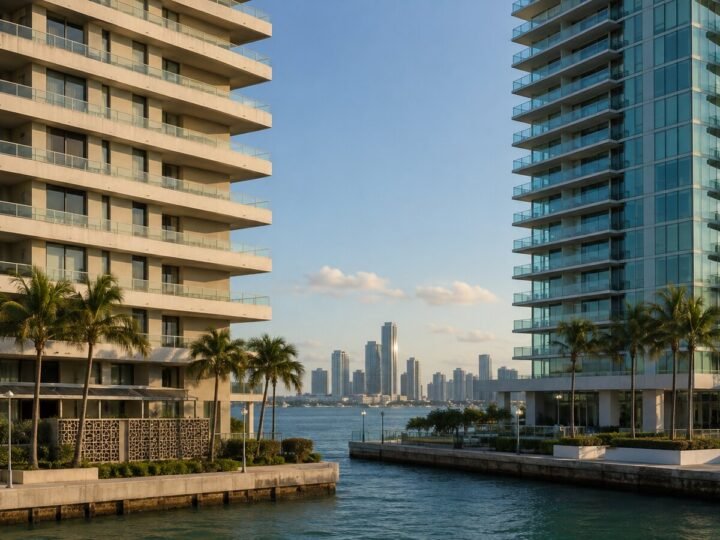
Brickell is the clearest answer for someone who wants Miami to feel like a compact global city. Residential towers, offices, restaurants, fitness studios and shops sit close together, and the free Metromover links the Financial District with Downtown and Omni. Metrorail adds regional connections, including a route toward Miami International Airport.
The trade-off is intensity. Brickell is vertical, busy and often expensive, and life outside the core can still require a car or rideshare. Yet few Miami neighborhoods make it as easy to combine work, dinner and the waterfront in one walkable day. Start near Brickell Avenue and the river, then compare the quieter residential feel around Brickell Key.
2. Downtown Miami: best for culture, events and regional transit
Downtown has Miami’s broadest mix of big-city institutions: arenas, museums, waterfront parks, courthouses, colleges, transit and a growing residential skyline. It is the practical choice for people who want quick access to concerts, basketball, museums and Biscayne Bay without making nightlife the only attraction.
The area changes block by block. Park West, the Central Business District and the Arts & Entertainment District each have a different rhythm, so tour on a weekday morning and an event night. The advantage is connectivity: the free 21-station Metromover system stretches from Brickell’s Financial District to the Omni area and connects with Metrorail.
3. Edgewater: best for bayfront city living
Edgewater offers a softer landing than Brickell without leaving the urban waterfront. Biscayne Bay and Margaret Pace Park shape daily life; Downtown, Wynwood and the Design District are close, while the residential streets feel calmer than the major commercial cores.
Housing is dominated by condo and apartment buildings, many with water views. Walkability is strongest around the park and neighborhood services, but commuting patterns vary by block. Edgewater works best for someone who wants a tower-and-water lifestyle and is comfortable using a mix of walking, cycling, transit and rideshare.
4. Coconut Grove: best for tropical village life
Coconut Grove is Miami’s oldest neighborhood and one of its most distinctive. A thick tropical canopy, bayfront parks, marinas and a compact center around Main Highway and CocoWalk create an atmosphere that is hard to reproduce elsewhere. It can feel relaxed in the morning and lively over dinner without becoming a pure nightlife district.
Housing ranges from cottages and townhouses to gated estates and new luxury condos. The village is walkable, and cycling is part of the local routine. Metrorail’s Coconut Grove station sits roughly a mile from the center, with a free trolley connection. For a useful comparison, tour Coconut Grove and Coral Gables on the same day: both are green and established, but the Grove is more organic and waterfront-oriented.
5. Coral Gables: best for architecture and a polished town center
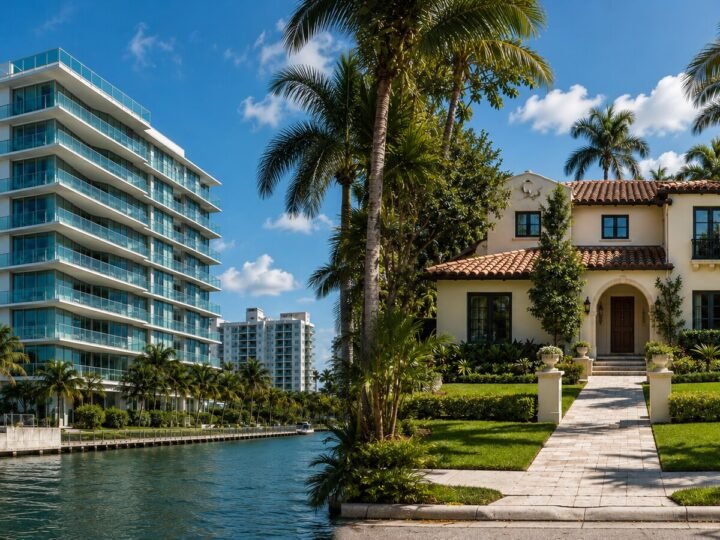
Coral Gables is defined by Mediterranean Revival architecture, landscaped boulevards, civic landmarks and a deliberately planned sense of place. Miracle Mile and pedestrianized Giralda Plaza concentrate restaurants and shops, while nearby residential streets shift quickly to homes, trees and quieter blocks.
The Gables gives buyers and renters several versions of the neighborhood: urban-core condos near the commercial district, historic houses closer to the center and larger properties farther south. A free trolley connects important corridors and Metrorail. It suits people who want greenery and design but still value an identifiable main street.
6. Miami Beach and South of Fifth: best for the beach-and-walk lifestyle
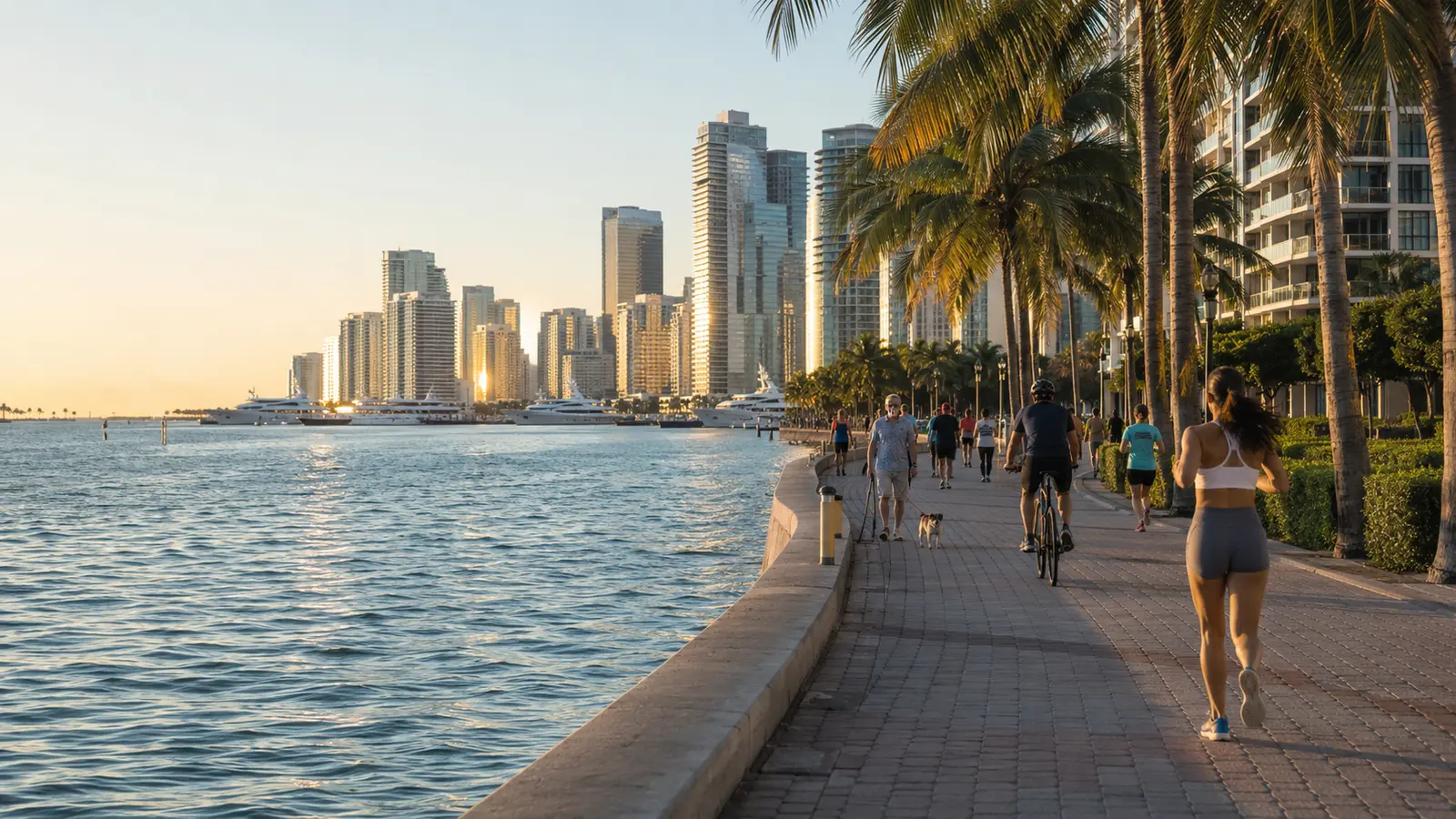
Miami Beach is its own city, and South Beach is only one part of it. For maximum walking, dining, culture and instant beach access, South Beach remains the most complete lifestyle package. At the southern tip, South of Fifth adds a more residential atmosphere around South Pointe Park, the marina and the waterfront path.
Move north and the feel changes: Mid-Beach is more resort-oriented and North Beach more residential. Miami Beach’s free trolley serves five routes from South Pointe Park toward North Beach, and cycling is practical across much of the island. The key trade-off is mainland access. A beautiful walk-to-the-ocean routine may come with bridge traffic when work or appointments are west of the bay.
7. Wynwood and the Design District: best for art, design and dining
Wynwood turns creative energy into a street-level experience: murals, galleries, breweries, restaurants and new apartments sit in a compact former warehouse district. Just to the north, the Design District is more polished, with public art, architecture, luxury retail and destination dining.
Together they form Miami’s strongest art-and-design corridor, but they are not interchangeable. Wynwood is casual and event-driven; the Design District is curated and architectural. New residential construction is changing both. Choose this area if you want the neighborhood itself to be part of your weekly social calendar and are comfortable with active weekends and ongoing development.
8. Little Havana: best for food, music and living culture
Little Havana’s identity is lived, not staged. Along Calle Ocho and the surrounding streets, Cuban coffee windows, restaurants, music venues, Domino Park, galleries and long-standing businesses make culture part of the everyday streetscape.
The housing stock includes bungalows, small multifamily buildings and newer infill. The City of Miami trolley serves the neighborhood, and Downtown is close, but car-light living depends heavily on the exact address and routine. Visitors should look beyond the famous few blocks and notice how quickly the commercial energy transitions into residential streets.
9. Key Biscayne: best for an island-and-outdoors routine
Key Biscayne places outdoor life at the center: beaches, boating, cycling, tennis and large parks bookend the village. Crandon Park lies to the north and Bill Baggs Cape Florida State Park to the south, giving the island an unusually strong connection to protected coastal space.
The village offers condos and detached homes, but this is not the place to prioritize regional transit. The Rickenbacker Causeway is the only road connection, so commute timing matters. For someone whose ideal day begins outside and who does not need a dense urban grid, the trade can be compelling.
10. Doral: best for airport and business access
Doral has developed into a major employment and residential center west of the airport. Newer planned communities, restaurants, offices, logistics hubs and golf-oriented development make it a practical base for people whose work and travel patterns point west rather than toward the beach.
The free Doral trolley operates four routes and connects with Metrorail, but most routines remain easier with a car. Doral’s appeal is efficiency: newer housing choices, proximity to Miami International Airport and access to important commercial corridors. Frequent travelers should also read our guide to Miami International Airport’s expanding economic role.
11. Pinecrest: best for larger lots and greenery
Pinecrest is a low-density village south of Coral Gables known for mature trees, detached homes and larger lots. Its center of gravity is residential rather than commercial, with parks, gardens and local shopping serving a quieter daily rhythm.
The trade-off is car dependence. Pinecrest is better understood as a choice for space than for a walk-everywhere routine. Compare property upkeep, flood exposure, insurance, commute time and landscaping needs—not only purchase price—because the experience and operating cost of a larger property differ meaningfully from a condo.
12. Morningside and MiMo: best for a historic bayfront pocket
Morningside was designated Miami’s first historic district in 1984. Its early-20th-century homes and bayfront park sit beside the MiMo Biscayne Boulevard Historic District, where mid-century motel architecture and a growing collection of restaurants create a small but memorable corridor.
This pairing works for someone who wants historic residential character close to the bay and quick access to the Design District, Downtown and Miami Beach. Walkability is more local than comprehensive, and housing opportunities can be limited. That scarcity is part of the charm and the challenge.
Brickell vs. Coconut Grove vs. Coral Gables
These three neighborhoods often appear on the same shortlist, but they solve different lifestyle problems.
- Choose Brickell when you want the shortest path between a high-rise home, office, dining and rail.
- Choose Coconut Grove when you want trees, bayfront recreation and a village that feels informal and tropical.
- Choose Coral Gables when architecture, landscaped streets and a polished commercial center matter more than immediate waterfront access.
The fastest way to decide is to spend three hours in each without an itinerary. Buy coffee, walk to a grocery store, make a trip you would take weekly and notice whether the pace feels energizing or inconvenient.
Can you live in Miami without a car?
Yes—but only if home, work and most weekly destinations align. Brickell and Downtown provide the strongest regional transit foundation because of Metrorail and the free Metromover. South Beach supports a strong walking-and-cycling routine with a free trolley, while parts of Wynwood, Coconut Grove, Coral Gables and Little Havana can work car-light for local trips.
Car-free and car-light are not the same. Test the actual commute, airport trip, grocery run and rainy-day alternative. Check current schedules and service alerts directly with transit agencies before signing a lease or contract. Miami-Dade’s official Metromover page currently lists 21 stations and daily service, and free municipal trolleys connect more than a dozen City of Miami neighborhoods.
A two-day Miami neighborhood test drive
Do not try to tour twelve neighborhoods. Use the matcher to select three, then spend enough time to feel the transitions.
- Day one morning: Walk your most likely neighborhood before 9 a.m. Test coffee, a grocery stop and the first mile of a commute.
- Day one evening: Return at dinner time. Listen for street activity, observe parking and see how public space is used.
- Day two morning: Visit the strongest alternative and complete the same routine.
- Day two afternoon: Tour the third option, then make one trip between all three using the transportation mode you expect to use.
- Before leaving: Write down the weekly friction in each place. The right neighborhood usually minimizes the tasks you cannot avoid—not just the ones you enjoy on vacation.
What Miami’s 2026 housing market means for neighborhood choice
Miami’s market entered the second half of 2026 with renewed transaction momentum. MIAMI REALTORS reported 2,107 Miami-Dade sales in June, up 14.3% from a year earlier and the county’s strongest June since 2023. Single-family sales rose 16.8%; condo sales increased 11.9%. The two segments nevertheless offer different negotiating environments: the same report measured 4.9 months of single-family supply and 12.3 months of condo supply.
That is useful for lifestyle shoppers. A neighborhood dominated by condos may offer more selection and negotiating room than a low-inventory district of detached homes, even when both are described as “hot.” Start with the daily life you want, then study the specific property segment. For the broader outlook, see our Miami housing market forecast for 2026–2030 and our analysis of the Miami multifamily market.
Seven costs to compare before choosing a neighborhood
The monthly payment or advertised rent is only the first line of the decision. Compare:
- Association dues and assessments. Review budgets, reserves, milestone inspections and pending projects for condos.
- Insurance. Building type, elevation, roof age, flood zone and wind mitigation can change the cost materially.
- Transportation. Add parking, tolls, fuel, rideshare and the value of commute time.
- Taxes. A seller’s current bill may not predict a buyer’s post-sale assessment.
- Maintenance. Larger lots, pools, seawalls and tropical landscaping require ongoing care.
- Resilience. Review flood maps, evacuation routes, building systems and emergency plans.
- Flexibility. Rental rules, pet policies, renovation limits and minimum lease terms can affect future options.
Miami’s lifestyle premium is real, but it should be measured against the full cost of carrying a home. Our analysis of Miami’s cost of living explains why housing, insurance and services can change the comparison with other global cities.
Frequently asked questions
What is the best neighborhood in Miami?
Brickell is the best all-around option for a dense, car-light, high-rise lifestyle. Coconut Grove leads for tropical village character and waterfront recreation; Miami Beach leads for beach access; Coral Gables leads for architecture and landscaped streets. The best choice depends on the routine you want to make easiest.
Where should a newcomer live in Miami?
A newcomer should first choose between an urban core, village, beach, island or lower-density residential setting. Brickell, Downtown and Edgewater simplify city access; Coconut Grove and Coral Gables offer established town centers; Miami Beach prioritizes the ocean; Doral prioritizes airport and western employment access.
Is Brickell or Downtown Miami better?
Brickell has a more concentrated live-work-dine routine and a polished residential identity. Downtown offers broader access to arenas, museums, government, colleges and major events. Both use the free Metromover; visit on a normal weekday and an event night before deciding.
What is the most walkable part of Miami?
South Beach and the Brickell-Downtown core provide the most complete walkable daily routines on this list. Coconut Grove’s village center, central Coral Gables and Wynwood also support local walking, though regional trips may require transit, rideshare or a car.
Which Miami neighborhood is best for nightlife?
South Beach offers the largest concentration of classic nightlife, while Wynwood emphasizes breweries, bars, art and events. Brickell combines restaurants, lounges and a dense residential core. Choose based on the atmosphere you want after midnight—and visit when those venues are actually operating.
Which Miami neighborhood is best for outdoor life?
Key Biscayne is the strongest all-around choice for beaches, parks, boating and cycling. Coconut Grove combines sailing, bayfront parks and shaded streets. Miami Beach makes the ocean part of a daily walking or cycling routine, while Edgewater provides urban access to Biscayne Bay.
Is Coconut Grove or Coral Gables better?
Coconut Grove feels more tropical, informal and waterfront-oriented. Coral Gables feels more planned, architectural and centered on Miracle Mile and Giralda Plaza. Both offer greenery and a mix of homes and condos; your preference will usually come down to Grove spontaneity versus Gables order.
Which neighborhood is closest to Miami International Airport?
Doral is the most airport-oriented lifestyle choice in this guide. Little Havana, Coral Gables, Downtown and Brickell can also provide practical access depending on traffic and transit. Always test the trip at the time you travel most often.
Are Miami Beach and the City of Miami the same place?
No. Miami Beach is a separate municipality on the barrier island east of Biscayne Bay. Brickell, Downtown, Edgewater, Coconut Grove, Wynwood and Little Havana are within the City of Miami. Coral Gables, Key Biscayne, Doral, Pinecrest and Miami Beach have their own municipal governments.
How should I compare Miami neighborhoods fairly?
Use the same real-life test in each: commute, groceries, exercise, parking or transit, an evening visit and a review of total housing costs. Verify current flood, insurance, building and transportation information with official sources and qualified professionals.
Methodology and sources
This guide evaluates neighborhoods by observable lifestyle attributes: land use, housing form, access to public spaces and water, cultural and commercial amenities, transportation options, airport access and relative housing cost. It does not rate schools, crime, residents or demographic composition. Neighborhood centers on the map are approximate and do not establish municipal, legal, school or flood-zone boundaries.
Primary sources include Miami-Dade County’s Metromover service information, the Greater Miami Convention & Visitors Bureau’s official neighborhood guides and free transportation guide, plus the June 2026 Miami-Dade market report from MIAMI REALTORS. Service, market and property information can change; confirm important details before making a housing decision.
Market intelligence. Capital insight. Delivered daily.
Miami Finance Review produces independent editorial analysis. Figures are attributed to their sources and independently cross-checked where possible. This content is informational and is not investment, legal, tax or lending advice.