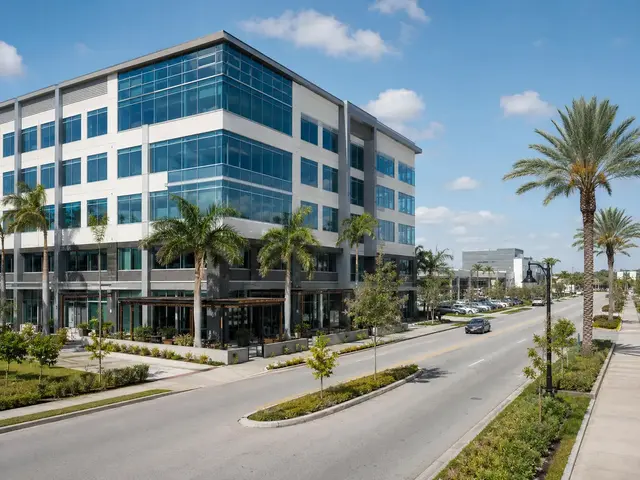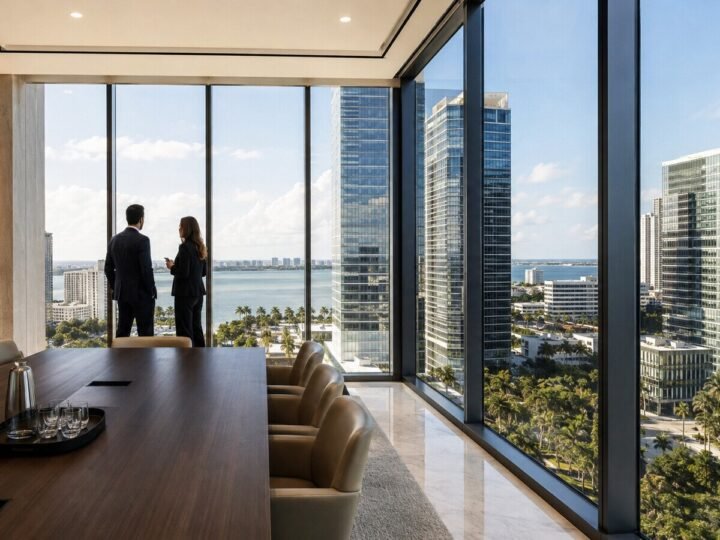
Miami office repositioning works when capital improvements are tied to a defined tenant segment and a realistic leasing strategy. Cosmetic renovations alone rarely solve weak demand. Owners need a coordinated plan for building systems, amenities, operating costs, lease economics and the capital required to reach stabilization.
Office repositioning works when it solves a specific tenant problem at a basis the market can support. It fails when a sponsor spends heavily on generic improvements without changing the building’s competitive position. Miami’s office market has benefited from corporate migration and demand for high-quality space, but performance still varies by submarket, age, access and tenant experience.
This analysis is part of Miami Finance Review’s connected research architecture. For the broader context, review companies moving to Miami in 2026, the full Miami commercial real estate outlook and Miami cap rates.
For wider market context, see Why Commercial Real Estate Borrowers Are Stress-Testing the Exit, Private Credit’s Expanding Role in Florida Real Estate, and South Florida’s Next Phase of Growth Will Be Financed Differently.
CBRE reported Miami office vacancy of 14.9 percent and average asking rent of $68.60 per square foot in the second quarter of 2026, with positive net absorption. Those numbers indicate a functioning market, not a guarantee for every asset. Tenants continue to compare buildings aggressively, and obsolete space can remain vacant even when the market average improves.
Key Takeaways
- Repositioning must begin with a defined target tenant and competitive set.
- Basis and leasing capital determine whether an improvement program can earn an acceptable return.
- Operations, access, technology and service often matter as much as visual design.
- Conversion is one option, but many buildings are better suited to office, mixed-use or partial reuse.
Start With the Competitive Set
The first step is to identify the buildings that actually compete for the same tenant. Geography alone is insufficient. A law firm, wealth manager, technology company and medical user may value different floor plates, parking, transit, branding and buildout. The repositioning plan should respond to the tenant segment most likely to absorb the available space.
Tour competing properties and document their rents, concessions, tenant-improvement allowances, amenities, access and vacancy. Ask brokers why tenants choose one building over another. The answer may be elevator speed, parking ratio, lobby security, floor-to-ceiling height, hurricane resilience or the ability to deliver turnkey space quickly.
A project cannot be everything to everyone. The sponsor should select a position and build a coherent experience around it. Fragmented upgrades produce a building that is improved but still undefined.
Basis Is the Most Important Amenity
An attractive purchase price creates room for capital improvements and leasing costs. A high basis requires aggressive rent or occupancy assumptions, which can make a repositioning fragile. The acquisition model should include the full cost of tenant improvements, commissions, free rent, operating deficits and capital repairs.
Sponsors often focus on construction cost while underestimating downtime. A vacant floor can require design, permits, construction and leasing before rent begins. During that period, the owner pays taxes, insurance, utilities, security and debt service. The carrying period belongs in the project budget.
The target rent must be supported by tenant alternatives. A beautiful renovation cannot force the market to pay a premium that exceeds the building’s location, views, parking or brand. Basis discipline protects the project when rent growth is slower than expected.
The Tenant Experience Begins Before the Lobby
Access is part of the product. Tenants evaluate the route from home, airport or client meeting, the ease of parking, drop-off, ride-share and building entry. Wayfinding, lighting and security influence the first impression before a tenant sees the suite.
Older buildings can improve competitiveness through better arrival sequencing, covered access, modern security and clearer circulation. These improvements may be less photogenic than a new lobby but more important to daily users. In South Florida, weather protection and resilient building operations are particularly valuable.
The owner should map the tenant journey from street to desk. Friction at any point can undermine the capital spent elsewhere.
Spec Suites and Delivery Speed
Many tenants want certainty about cost and occupancy date. Spec suites can reduce decision time by providing completed or near-completed space. They work best when layouts match the target tenant, finishes are durable and the owner can demonstrate a repeatable delivery program.
Spec construction should be based on leasing evidence, not personal taste. Brokers can identify the suite sizes and configurations with the deepest demand. Smaller suites may lease faster but require more corridors, kitchens and mechanical distribution. Larger suites have lower per-square-foot buildout cost but a smaller tenant pool.
The underwriting should include lease-up pace, concessions and the possibility that completed suites remain vacant. A limited initial program allows the owner to test demand before building the entire vacancy.
Amenities Must Support the Business Case
Fitness centers, conference facilities, food service and outdoor space can improve tenant retention, but they require capital and operating expense. The amenity should address a documented demand and fit the building’s scale. A small asset may be better served by partnerships with nearby operators than by building underused facilities.
Flexible conference and collaboration areas can help tenants reduce the amount of private leased space. That value can support rent and retention. However, management, booking, cleaning and technology must be reliable. An amenity that is frequently unavailable damages the building’s credibility.
The owner should define how each amenity affects leasing, retention or operating revenue. If the connection is unclear, the capital may be better used for core systems or tenant improvements.
Building Systems and Resilience
Tenants and lenders care about air quality, power, water intrusion, elevators, life safety and storm preparation. A cosmetic repositioning that leaves unreliable systems untouched can create expensive failure after lease-up. Engineering diligence should rank systems by risk, remaining life and tenant impact.
Energy and water improvements can reduce operating expense, but the payback depends on usage, utility rates and available incentives. Smart-building systems can improve control and reporting when they are integrated with operations. Technology installed for marketing value alone can become obsolete quickly.
Resilience is a competitive feature in South Florida. Clear emergency plans, backup power strategy, flood mitigation and rapid post-storm communication can support tenant confidence and insurance discussions.
Leasing Capital Is Part of the Project
Tenant improvement allowances and commissions are often the largest variable after acquisition. They should be treated as committed project capital, not a future operating expense. The owner needs enough liquidity to sign leases when demand appears.
Lease economics should be compared on a net-effective basis after free rent, improvements, commissions and operating expense structure. A high face rent can produce a modest return if the concession package is large. Renewal economics should also account for the cost avoided by retaining a tenant.
Lender reserves and future-funding conditions must align with the leasing plan. If a loan funds improvements only after a signed lease, the sponsor may need cash for design and preleasing work. The draw process should be negotiated before closing.
When Conversion Makes Sense
National office inventory has begun to decline as conversions, demolitions and repositioning remove obsolete space. Cushman & Wakefield reported a 0.6 percent inventory decline over five quarters in its Q2 2026 analysis. Conversion can improve a market by eliminating functionally obsolete stock, but it is not feasible for every building.
Residential conversion depends on floor-plate depth, window line, plumbing distribution, parking, zoning, structure and the cost of code compliance. Hotels, education, medical or mixed-use may be alternatives. The existing basis and public incentives can determine feasibility.
A conversion study should be completed before assuming the office use has failed. Some buildings can achieve better returns through selective demolition, smaller suites, a new ground-floor use or a repositioned tenant strategy. The answer should follow the physical and financial analysis.
Measuring Success
A repositioning should have measurable objectives: occupancy, net-effective rent, lease duration, renewal rate, operating expense, tenant satisfaction and value. Management should track leasing inquiries, tours, proposals and reasons for lost deals. Those data reveal whether the product or pricing needs adjustment.
Capital should be released in stages tied to evidence. If initial spec suites lease quickly, the program can expand. If tours remain low, additional construction may not solve the problem. A responsive plan protects capital.
The final measure is not whether the building looks new. It is whether the investment improves durable cash flow and market liquidity.
The Bottom Line
Miami office repositioning can work because the market continues to attract tenants and quality space. The opportunity is not universal. It belongs to buildings with a defensible basis, a clear target tenant and a capital plan that includes leasing costs and operational improvement.
The strongest strategies combine physical upgrades with service, resilience and delivery speed. They avoid generic amenity spending and test conversion only where the building supports it. Repositioning is a business model, not a renovation package.
A Phased Capital Plan Protects the Downside
Office repositioning does not need to be completed in one campaign. A phased program can address life safety and core systems first, then deliver the arrival experience, selected spec suites and amenities as leasing evidence develops. This sequence protects the downside because capital is committed only when the project has validated demand or removed a known risk.
The phase plan should include clear decision gates. Examples include tour volume, proposal conversion, signed rent, tenant profile and the performance of initial completed suites. If the indicators are weak, the owner can change pricing or product before spending on the next phase. If they are strong, the lender and equity partners have evidence to support additional capital.
Phasing also creates a communication framework for existing tenants. Construction noise, access changes and temporary closures can increase rollover risk if they are poorly managed. A detailed tenant plan, including schedule notices and service recovery, helps preserve current income while the building is improved. Repositioning succeeds when the existing cash flow and future product are managed together.
Frequently Asked Questions
Is the Miami office market improving in 2026?
CBRE reported positive absorption, 14.9 percent vacancy and average asking rent of $68.60 per square foot in Q2 2026, but performance varies significantly by building and submarket.
What is office repositioning?
It is a coordinated improvement of the building, tenant experience, operations, leasing strategy and capital structure to improve occupancy, rent and value.
Do office amenities always increase value?
No. Amenities create value only when target tenants use them and the leasing benefit exceeds construction and operating cost.
Can every office building convert to apartments?
No. Floor plates, windows, plumbing, parking, zoning, structure and basis determine conversion feasibility.
Sources
Market intelligence. Capital insight. Delivered daily.
Miami Finance Review produces independent editorial analysis. Figures are attributed to their sources and independently cross-checked where possible. This content is informational and is not investment, legal, tax or lending advice.